
Egg Substitutes for Gluten-Free Baking (With Ratios)
Homemade is always betterEgg Substitutes for Gluten-Free & Dairy-Free Baking (That Actually Work)
If you bake gluten-free and dairy-free, eggs often do more heavy lifting than they do in conventional baking. They bind crumbly GF flours, add lift, trap air, and help your bakes set instead of collapsing or turning gummy.
This guide gives you the most reliable egg swaps, the exact ratios, and (most importantly) how to choose the right one based on what the egg is doing in your recipe.
What eggs do in baking (so you can swap them correctly)
In a recipe, eggs usually provide one or more of these jobs:
-
Binding/structure (keeps GF bakes from crumbling)
-
Lift/leavening support (helps rise and stay fluffy)
-
Moisture (prevents dryness)
-
Emulsifying (helps fat + water mix for a smooth batter)
-
Set/firmness (helps the center bake through)
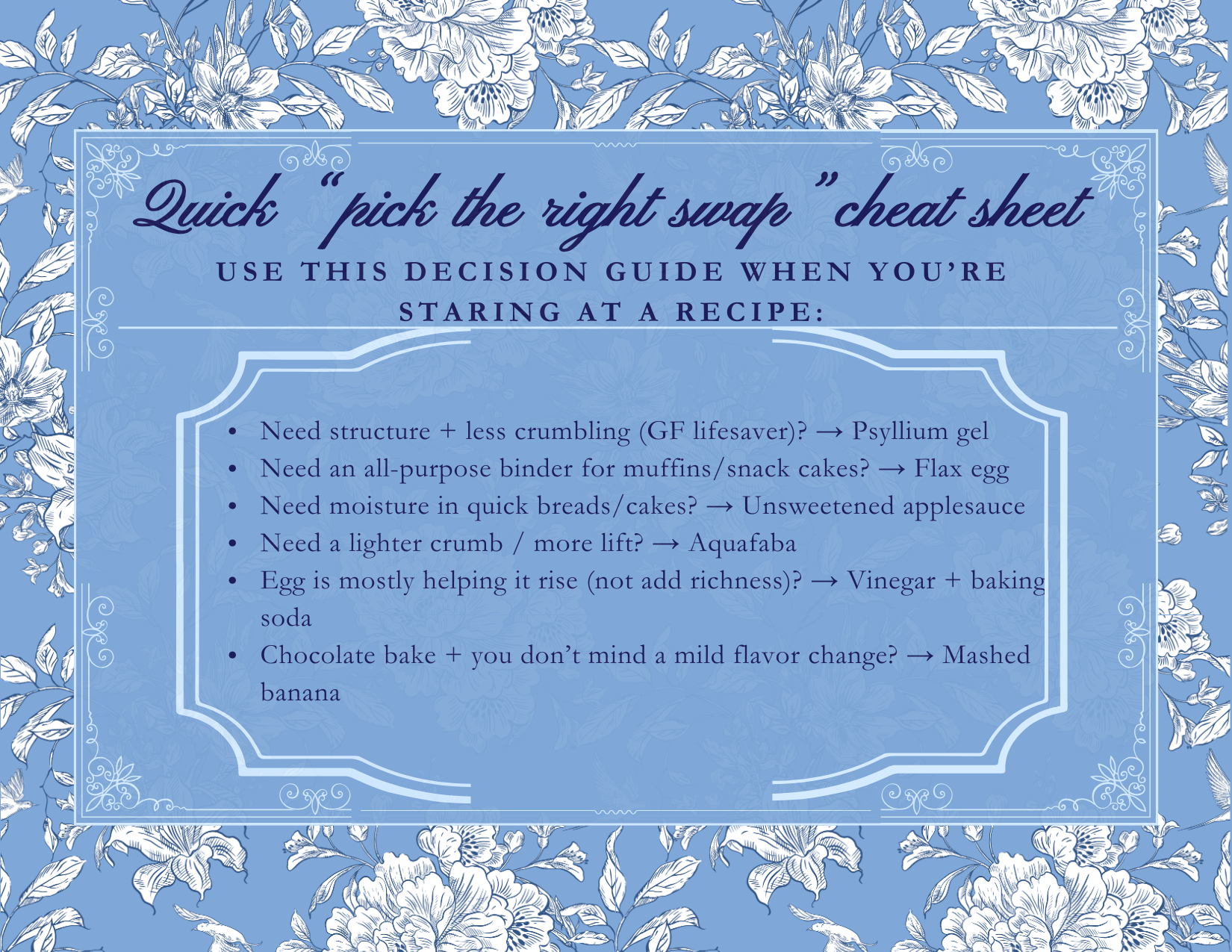
Key rule: don’t pick an egg swap by popularity—pick it by the job you need.
How to use each swap
(so your texture stays right)
1) Flax “egg” (best everyday binder)
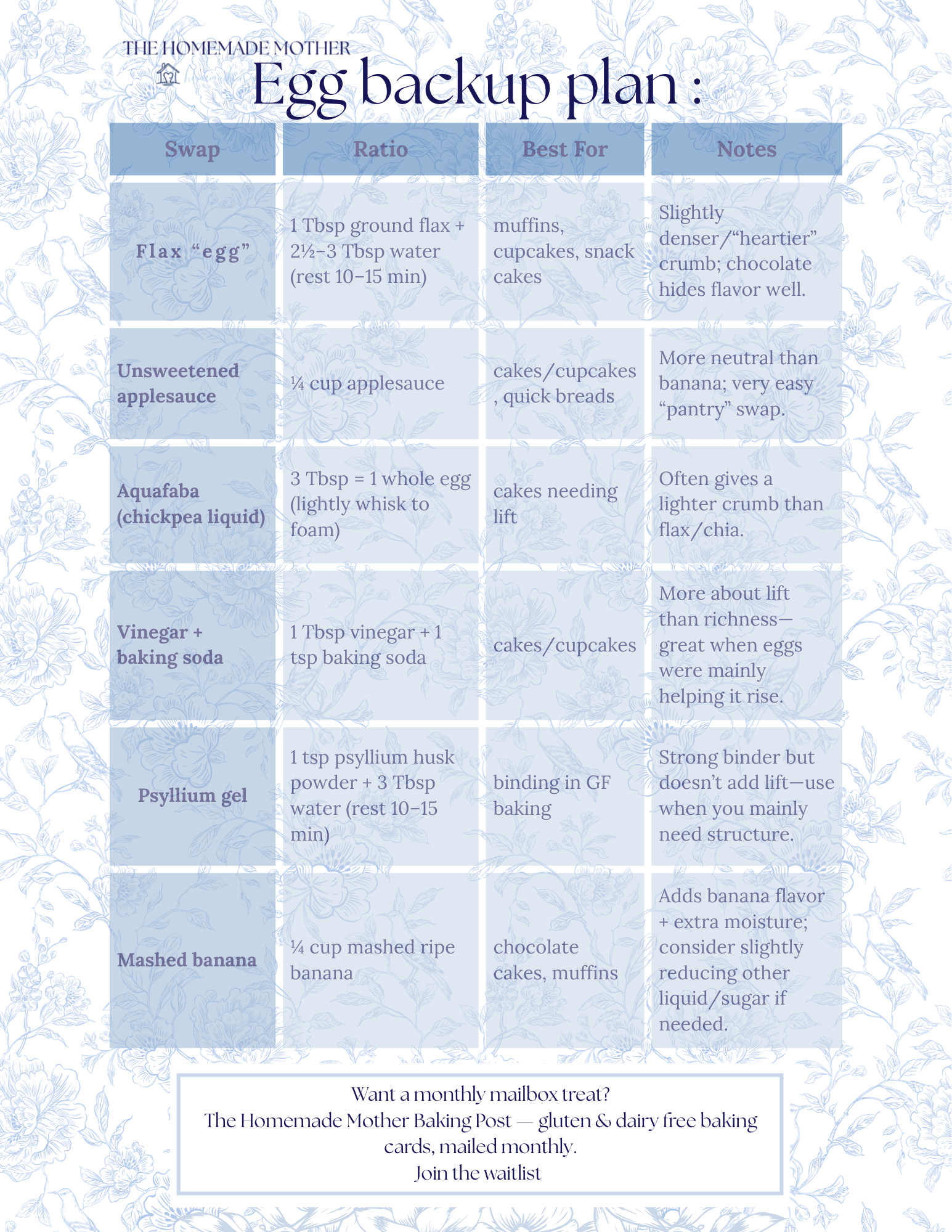
How to do it: Mix ground flax + water and let it gel 10–15 minutes. Add with your wet ingredients.
Best when: your recipe needs binding more than airy lift (muffins, cupcakes, snack cakes).
GF/DF texture tip: If your bake turns too dense, reduce flax slightly and pair with aquafaba for lift (e.g., 1 flax egg + 1 aquafaba egg in a 2-egg recipe).
2) Unsweetened applesauce (easy moisture + tenderness)
Applesauce is your “quick bread insurance” when GF bakes run dry.
Best when: the recipe needs moisture and tenderness (cakes, cupcakes, banana-bread style loaves).
Watch-outs:
-
Can make the crumb slightly softer. If your recipe is already very wet, reduce another liquid by 1–2 Tbsp.
-
Best for 1–2 egg swaps. If the recipe has 3–4 eggs, you’ll usually need a stronger binder too (psyllium or flax).
3) Aquafaba (for lighter crumb + lift)
Aquafaba is especially useful when egg whites were providing airiness.
How to do it: Measure 3 Tbsp per egg and whisk until foamy (not necessarily stiff peaks unless the recipe is meringue-based).
Best when: you want lift without heaviness—cakes that need a lighter bite.
Pro move (GF-friendly): Pair aquafaba with psyllium gel when you need both lift and structure.
4) Vinegar + baking soda (lift-only swap)
This swap is basically a controlled “bubble generator.”
Best when: eggs were mainly helping the batter rise, not add richness (simple cakes/cupcakes).
Important: Mix the baking soda into dry ingredients, vinegar into wet, then combine and bake promptly—don’t let the batter sit or you’ll lose the lift.
5) Psyllium gel (structure hero for gluten-free)
If your GF bakes crumble, sink, or won’t hold together, psyllium is often the fix.
Best when: you need structure/binding more than fluffiness (especially GF loaves, muffins that fall apart, cookies that won’t hold shape).
Avoid gummy texture:
-
Measure accurately (psyllium is powerful).
-
Rest the batter, then bake fully—GF + psyllium often needs a touch more bake time to set.
6) Mashed banana (moisture + flavor)
Banana is great, but it’s not neutral.
Best when: chocolate muffins/cakes (banana flavor hides better), or when you want extra moisture.
Adjustments: If your batter becomes too wet, reduce other liquid slightly and consider reducing sugar a bit (ripe banana adds sweetness).
Substitutions For Recipes
Gluten-free & dairy-free structure tips (to prevent crumbly or gummy bakes)
1) Rest the batter (seriously)
GF flours and binders need time to hydrate.
-
Muffins/cakes: rest 10–15 minutes
-
Loaf-style bakes: rest 15–30 minutes
2) Don’t remove eggs and remove binders
If a recipe already relies on eggs for structure, replacing eggs without adding a binder can cause:
-
crumbling
-
sinking
-
wet/gummy centers
If your recipe has no binder at all, psyllium gel is usually your safest structural swap.
3) Pick the swap based on the bake
-
Muffins: flax or psyllium (then add lift if needed)
-
Cupcakes: aquafaba or vinegar+soda for lift, plus binder if crumbly
-
Quick breads: applesauce or banana (plus binder if needed)
-
Light cakes: aquafaba (often best)
4) Expect bake-time changes
Egg-free GF batters can take longer to set. Use the cues:
-
firm top
-
clean toothpick (or a few moist crumbs, not wet batter)
-
center springs back
Troubleshooting: quick fixes
-
Crumbly / falls apart: add psyllium gel (or use flax instead of applesauce/banana)
-
Too dense: switch one egg replacement to aquafaba or use vinegar + baking soda
-
Gummy center: reduce psyllium slightly, rest batter, bake longer, and avoid too much applesauce/banana
-
Flat / didn’t rise: vinegar + baking soda (and get it into the oven fast), or add aquafaba
FAQ
What is the best egg substitute for gluten-free baking?
If you need structure, psyllium gel is the most reliable. For everyday muffins and snack cakes, flax eggs work well.
What can I use instead of eggs in cakes and cupcakes?
For lighter cakes, use aquafaba. For lift in simple cakes, use vinegar + baking soda. If the cake crumbles, add psyllium gel.
Can I replace multiple eggs in one recipe?
You can, but texture matters more as egg count increases. For 3+ eggs, use a combo (example: psyllium for structure + aquafaba for lift).

© 2025 The Homemade Mother All Rights Reserved
0 Comments