
Brown Sugar in Baking Science
Homemade is always betterBrown sugar is not “just sweetener”—it’s a texture and chemistry ingredient. Most grocery-store brown sugar is refined granulated sugar with molasses added back in, and the light vs dark difference is mainly how much molasses is present.
In practical baking terms, that molasses makes brown sugar more moisture-retentive and more reactive in recipes that use baking soda. That’s why swapping white sugar for brown sugar can change chewiness, spread, browning, and even rise—especially in cookies and quick breads, and often even more noticeably in gluten-free (GF) baking where starch gelatinization is a primary structure-builder.
This post gives you a clear light-vs-dark comparison, the science behind what changes in your batter, and the most reliable substitution method when you’re out.
Making your own scratch pantry?
If you’re building a from-scratch pantry, you’ll also want to know how to make your own homemade vanilla extract and baking powder.
What brown sugar is
Most “soft” brown sugar sold for baking today is made by taking refined white sugar and adding molasses back in (or coating the crystals with a molasses-containing syrup).
Internationally, standards often describe soft brown sugar as a fine-grain, purified, moist sugar that can range from light to dark brown.
What molasses is
Molasses is a thick syrup separated from sugar crystals during sugar refining (often via centrifugation). Lighter molasses comes from earlier “spins,” and darker molasses from later ones.
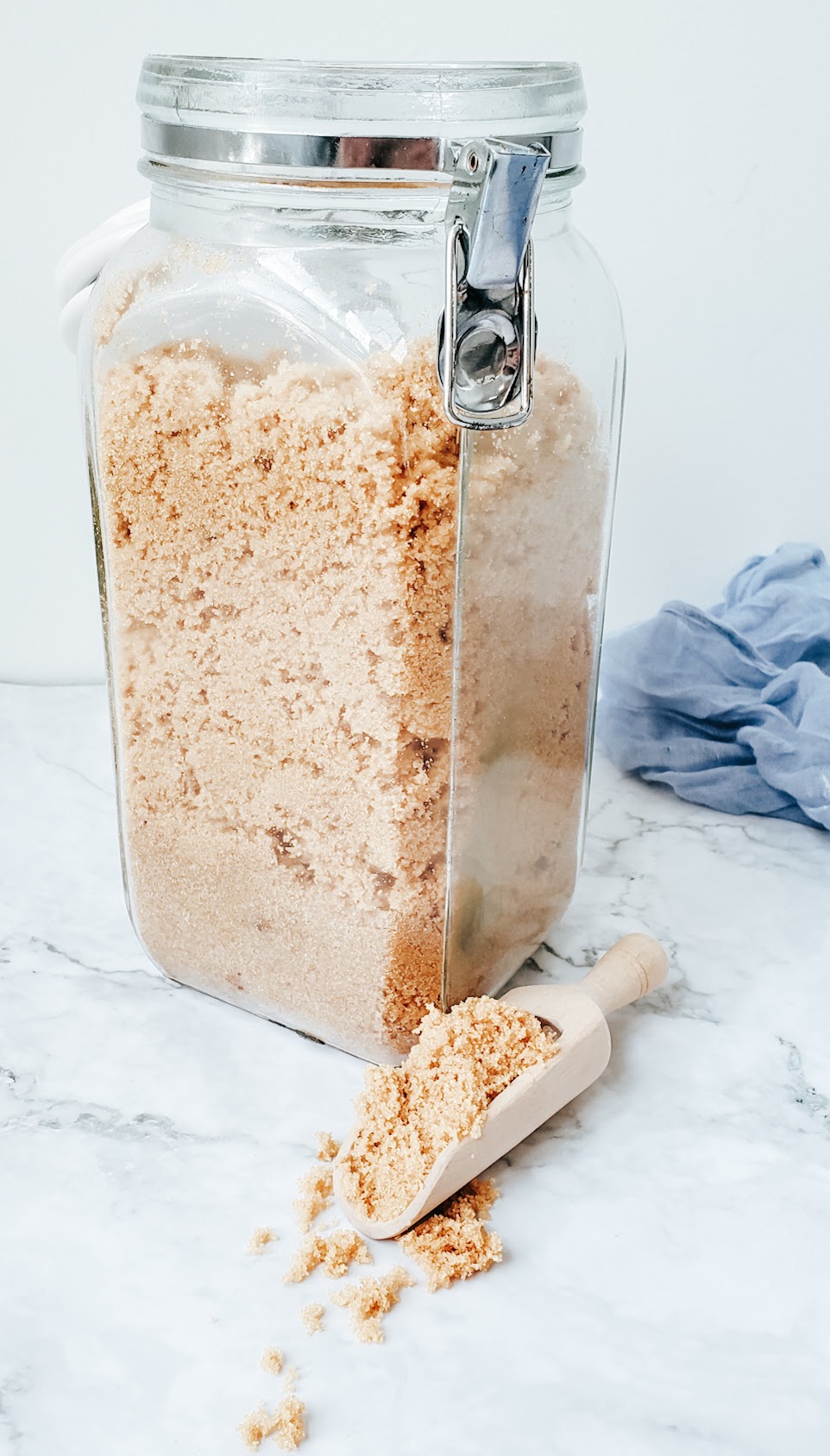
Why brown sugar behaves differently than white sugar
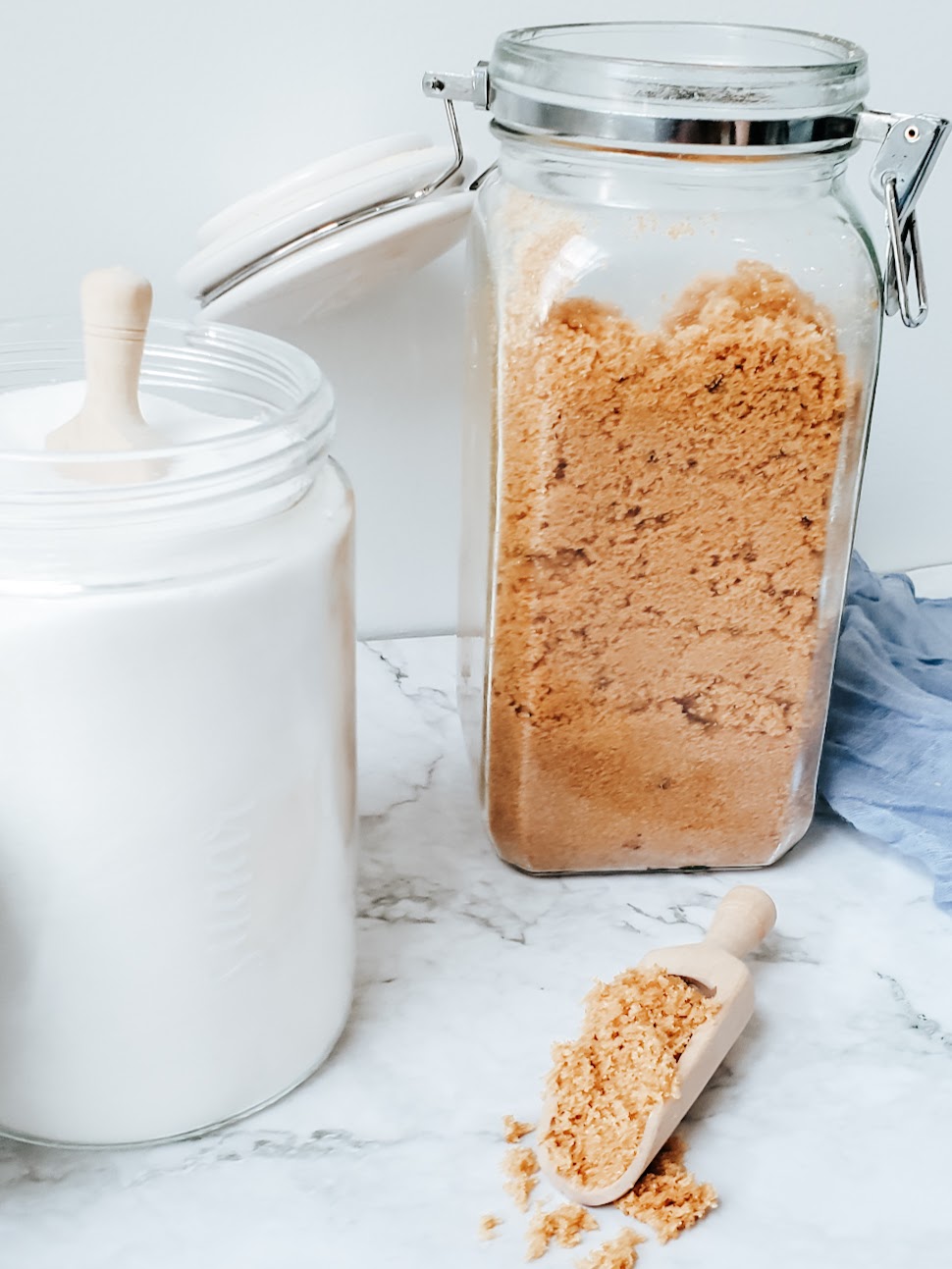
The biggest functional differences come from the combined effect of:
- More moisture and humectancy (brown sugar stays “soft” and contributes softness/chew).
- More flavor compounds (toffee/caramel and deeper notes from molasses).
- More acidity (molasses is acidic enough to matter in baking-soda recipes).
If you bake gluten-free, that “moisture + sugar chemistry” effect can be amplified because GF structure relies heavily on starch thickening/gelatinization rather than gluten networks.
Light vs dark brown sugar
The real difference
The main difference is molasses level. A widely cited baking reference from King Arthur Baking reports typical molasses levels around 3.5% for light brown sugar and 6.5% for dark brown sugar.
In practice, that means dark brown sugar tastes more molasses-forward and can nudge color and perceived moisture in the finished bake—especially when you’re using a lot of it (think gingerbread, spice cakes, streusel, thicker cookie doughs).
Can you swap light and dark?
Most of the time: yes. Expect small shifts in flavor and color, and occasionally a subtle difference in how baking soda performs because acidity changes with molasses level.
If a recipe is heavily brown-sugar-driven (for example, a streusel that’s mostly brown sugar, or a gingerbread where molasses character is the point), use the specified type when you can.
What brown sugar does in baking
It changes moisture retention and texture
Brown sugar is typically softer because molasses helps retain moisture and discourages hard crystallization.
Practical outcomes you’ll notice:
- More brown sugar often correlates with softer/chewier cookies compared with more white sugar, which tends to push toward crispness.
- In GF baking, where starch gelatinization is a major “structure moment,” higher sugar levels can delay thickening/setting and contribute to a gummy center if the bake is underbaked or sliced too soon.
It affects spread and “set timing” in cookies
White sugar tends to yield crisper cookies, while brown sugar tends to yield softer cookies, in part because brown sugar brings more moisture via molasses.
It changes leavening in baking-soda recipes
This is the most important “why your swap failed” point:
Baking soda needs an acid in the batter to create reliable carbon dioxide lift. Acid-base reaction → CO₂ → rise.
Brown sugar (because of molasses) is often one of the acidic ingredients that helps baking soda work as intended.
So if you replace brown sugar with white sugar in a recipe that relies on baking soda, you can end up with:
- Less lift (denser crumb)
- Different spread
- Off flavors if soda isn’t neutralized well
GF note: Because GF batters often need every bit of correctly-timed lift and set, the “lost acid” problem can show up as collapse or gumminess more readily than in wheat baking.
Substitutions and homemade brown sugar
The most reliable substitute
If you have granulated sugar + molasses, that’s the closest match to commercial brown sugar.
Ratio guidance is: for each cup of brown sugar in a recipe, combine 1 cup (198g) granulated sugar with 2 tsp (14g) molasses for light or 1 Tbsp (21g) molasses for dark.
You don’t have to pre-mix it—adding both to the recipe works because the mixing step in your batter/dough distributes the molasses.
Why weighing matters
Volume measures for brown sugar assume it’s packed, and different brands/humidity levels pack differently. If you want predictable results (especially GF), weigh it.
A commonly used reference weight for 1 cup packed brown sugar is ~213g.
Can you substitute white sugar directly?
Sometimes, but it’s riskier.
If the recipe uses baking powder only (which includes its own acid), white sugar is more likely to “work” structurally—though you’ll lose molasses flavor and some softness.
If the recipe uses baking soda, swapping in white sugar can change rise and flavor because you removed an acidic ingredient that may have been part of the reaction system.
Storage and troubleshooting
Why brown sugar turns into a brick
Brown sugar hardens primarily when moisture in the molasses component evaporates, causing sugar crystals to clump and cement together.
Best storage method
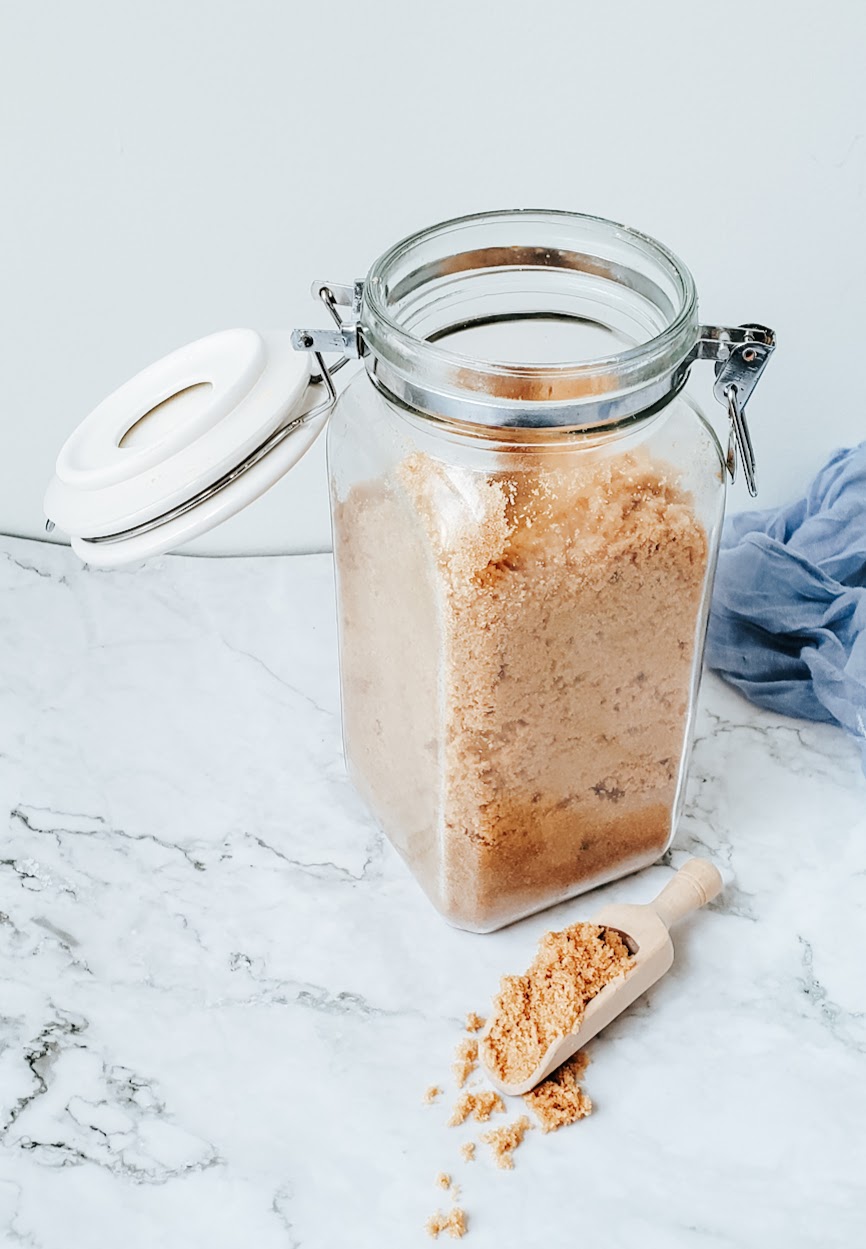
Store brown sugar airtight to slow moisture loss. You could also store in a freezer for long-term storage (then thaw and fluff). Careful where you store it because sugars can absorb odors if stored near strong smells.
I personally store mine in this. It has been one of the best baking investments I’ve made (calling it an inventment is harilous because it’s not even that expensive but I’m “an adult” now and try to spend my money wisely).
How to soften hardened brown sugar
If you have time (gentler methods):
- Bread slice in an airtight container: moisture transfer over several hours.
- Terracotta/clay sugar saver: soak briefly, pat dry, seal with sugar.
If you need it now:
- Microwave with a damp paper towel in short bursts, then use immediately (it can re-harden as it cools).
FAQ
Is brown sugar just white sugar with molasses?
In most grocery-store “soft” brown sugar, yes—refined white sugar with molasses added back in
Does brown sugar matter more in gluten-free baking?
Often, yes. GF baking relies heavily on starch gelatinization for structure, and sugars compete for water and can delay thickening/setting. That can increase the risk of a gummy center if underbaked or cut hot.
How much molasses is in light vs dark brown sugar?
Typical values reported by major baking references are about 3.5% in light brown sugar and 6.5% in dark brown sugar (by weight), though it can vary by brand and region.
Can I use light and dark brown sugar interchangeably?
Usually yes. You’ll mainly change flavor and color; texture changes are typically subtle unless the recipe uses a lot of brown sugar or relies on baking soda where acidity matters.
Why do my cookies get softer when I use more brown sugar?
Because brown sugar brings molasses, which helps retain moisture—pushing cookies toward soft/chewy rather than crisp.
What’s the best substitute if I’m out of brown sugar?
Granulated sugar plus molasses is the closest match. A common ratio is 1 cup (198g) sugar + 2 tsp (14g) molasses for light, or + 1 Tbsp (21g) molasses for dark.
0 Comments